


- Details
- Written by Tong
- Hits: 3397

Grandmaster Wu Yuxiang
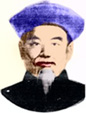
(The founder of Wu-style Taijiquan)
In the early nineteenth century, China remained under the strict order and complex realities of the Qing dynasty (清朝, Pinyin: Qīng Cháo). In Guangfu Township (广府, Pinyin: Guǎngfǔ), Yongnian (永年, Pinyin: Yǒngnián), Hebei Province (河北, Pinyin: Héběi), a son was born into a wealthy scholar family. He was Wu Yuxiang (武禹襄, Pinyin: Wǔ Yǔxiāng), who would later become a crucial foundation of a Taijiquan lineage distinguished by refinement, depth, and quiet subtlety beyond any school of his time.
Wu Yuxiang’s original name was Heqing (河清, Pinyin: Hé Qīng). He grew up in a family that valued education, tradition, and self-cultivation. His parents encouraged all their sons to study both the civil and martial arts. Within the same household, he had two elder brothers: Wu Chengqing (武澄清, Pinyin: Wǔ Chéngqīng) and Wu Ruqing (武汝清, Pinyin: Wǔ Rǔqīng), each of whom chose a different path in life.
His elder brothers entered official service and pursued bureaucratic careers, while Wu Yuxiang chose to live as a scholar and teacher in his hometown. Yet beneath the calm of that life, he was deeply devoted to the serious study of internal martial arts. For him, boxing was not merely a means of victory, but a path toward understanding bodily structure, the mind, and the natural laws governing movement.
The Wu family was wealthy and owned two teahouses, one on the eastern street and another on the western street of the town. Later, the two teahouses were merged, and Chen Dehu (陈德湖, Pinyin: Chén Déhú), from the Chen family village Chenjiagou (陈家沟, Pinyin: Chén Jiā Gōu) in Wen County, Henan Province, rented the western teahouse to sell medicinal herbs. The shop was named Taihetang (太和堂, Pinyin: Tài Hé Táng), a place that would later become a quiet point of connection between the worlds of medicine, herbal practice, and martial arts.
In the same area of Yongnian lived another young man who would later become known throughout the land: Yang Luchan (杨露禅, Pinyin: Yáng Lùchán). The two grew up close to one another, often training, exchanging ideas, and engaging in discussion. Yang Luchan was determined, adventurous, and ready to travel in search of skill, while Wu Yuxiang, though no less eager to learn, chose a path that was calm, careful, and gradual.
When Yang Luchan traveled to the Chen village (陈家沟, Pinyin: Chén Jiāgōu) and trained with Chen Changxing (陈长兴, Pinyin: Chén Chángxīng) in Henan Province (河南, Pinyin: Hénán) until he became fully proficient in Chen-style Taijiquan, he returned with experiences and methods unfamiliar to the people of Yongnian. This took place during the Daoguang period (道光年间, Pinyin: Dàoguāng Niánjiān). His return sparked deep interest in Wu Yuxiang, who quietly observed the movements, structure, and underlying principles within Yang Luchan’s practice without haste.
Nevertheless, Wu Yuxiang did not formally acknowledge Yang Luchan as his teacher, nor did he confine himself to learning indirectly through Yang as a companion. He believed that genuine martial knowledge must rest upon both direct experience and principled theoretical reflection.
In 1852, Wu Yuxiang’s elder brother, Wu Chengqing, passed the imperial examination at the jinshi (進士, Pinyin: Jìnshì) level and was appointed magistrate of Wuyang Zhixian (武阳知县, Pinyin: Wǔyáng Zhīxiàn) County in Henan Province. Acting on his mother’s instructions, Wu Yuxiang set out to visit his brother. While passing through Zhaobao (赵堡镇, Pinyin: Zhàobǎo Zhèn), he learned that Chen Changxing was already gravely ill and unable to accept students; Chen would pass away the following year.
Nevertheless, in the same village Wu Yuxiang heard of another martial arts master whose skill was widely acclaimed. This was Chen Qingping (陈清平, Pinyin: Chén Qīngpíng), the inheritor of the Zhaobao Taijiquan tradition. Wu Yuxiang remained in Zhaobao and trained under Chen Qingping. Although the period of study was not long, it proved sufficient for him to grasp the essential core of the art—something fundamentally different from what he had previously known.
Training in Zhaobao enabled Wu Yuxiang to clearly perceive that Taijiquan was not confined to postures or outward forms, but constituted a coherent system grounded in weight transfer, whole-body coordination, and movement governed by rational principles.
After returning home, he received further significant news. Wu Chengqing had discovered Wang Zongyue (王宗岳, Pinyin: Wáng Zōngyuè)’s Taijiquan Treatise 《太极拳论, Pinyin: Tàijí Quán Lùn》 in a salt shop in Wuyang County. This text was akin to a dialogue across time. Wu Yuxiang read and reread it, reorganizing his understanding by comparing the insights gained from Chen Qingping with those articulated in the classical text, gradually forging a synthesis that became uniquely his own.
Grounded in their friendship, the two developed a relationship characterized by mutual exchange: Wu Yuxiang conveyed theoretical principles from classical Taijiquan texts in return for the practical Chen-family Taijiquan skills that Yang Luchan had shared with him.
During this period, Wu Yuxiang’s approach began to take clear shape. He emphasized stillness, structural precision, and movement arising from within. The training principles and texts he compiled and explicated include:
-
The practice principles of the Thirteen Postures 《十三势行功要解, Pinyin: Shísān Shì Xínggōng Yàojiě》
-
Releasing and dissolving force in push-hands 《打手撒放, Pinyin: Dǎshǒu Sāfàng》
-
An explanation of Taijiquan 《太极拳解, Pinyin: Tàijí Quán Jiě》
-
A summary of essential Taijiquan theory 《太极拳论要解, Pinyin: Tàijí Quán Lùn Yàojiě》
-
A brief discussion of the Thirteen Postures 《十三势说略, Pinyin: Shísān Shì Shuōlüè》
-
The four-character secret 《四字秘诀, Pinyin: Sì Zì Mìjué》
-
The eight principles of body usage 《身法八要, Pinyin: Shēnfǎ Bā Yào》
-
Essential points of push-hands 《打手要言, Pinyin: Dǎshǒu Yào Yán》
Wu Yuxiang regularly tested his art against skilled martial practitioners and was said to have prevailed in every encounter. Within just two years, his skill advanced to the level of mastery, alongside the creation of practice sets that integrated combat, health, and self-cultivation.
Despite his knowledge and ability, Wu Yuxiang did not open a school to accept students broadly. He believed that transmission without proper understanding would leave only an empty shell. For this reason, transmission was strictly confined within the family, and the sole direct recipient was his nephew, Li Yiyu (李亦畬, Pinyin: Lǐ Yìyú), the true disciple and primary lineage successor.
As time passed, the approach established by Wu Yuxiang was organized, analyzed, and recorded by Li Yiyu, and later disseminated by subsequent inheritors such as Hao Weizhen (郝为真, Pinyin: Hǎo Wéizhēn), becoming known as “Wu (Hao)–style Taijiquan 《武(郝)式太极拳; Pinyin: Wǔ (Hǎo) Shì Tàijíquán》.” Later masters such as Gu Liuxin (顾留馨, Pinyin: Gù Liúxīn) described this style as “concise and to the point, without a single superfluous word (简练精要,无一浮词).”
Looking back to its origins, it becomes clear that Wu Yuxiang did not build his reputation by founding a large public school. Rather, he laid a foundation through quiet dedication, meticulous refinement, and fidelity to principle. For this reason, his name may not be widely prominent, yet it stands out as that of one who rendered Taijiquan “clear from within” and established a stable path for later inheritors to follow without losing their way.
Historical Context and Lineage Clarification
Wu Yuxiang’s place in internal martial arts history is often misunderstood when viewed through the lens of later stylistic names alone. It is important to clarify that Wu Yuxiang did not become a disciple through the traditional ritual of formally acknowledging a master (拜师, Pinyin: Bàishī) under Yang Luchan. In traditional Chinese martial lineages, only after such a formal acknowledgment is a master–disciple relationship established in the strict sense.
Yang Luchan, after his formative training in Chen-style Taijiquan, became widely recognized for his skill and later developed what came to be known as Yang-style Taijiquan in Beijing. Wu Yuxiang’s early engagement with Yang was one of close observation, study, and exchange, rather than a formal teacher–disciple relationship defined by lineage ritual.
Wu Yuxiang’s deeper theoretical refinement came through his study with Chen Qingping in Zhaobao after his initial intention to study with Chen Changxing was forestalled by illness. This study, combined with Wu Yuxiang’s own analytical insights from classical writings such as the Taijiquan Treatise, informed the unique theoretical framework that underlies what is now recognized as Wu (Hao)-style Taijiquan.
A later historical point of confusion arises from the romanization similarity between Wu (武) and Wu (吳) in English. The latter is associated with Wu Jianquan, who with Yang Banhou contributed to the development of Wu-style Taijiquan distinct from the Wu (Hao) lineage established through Wu Yuxiang. These distinctions, grounded in both ritual and intellectual lineage, are important for an accurate understanding of Chinese internal martial arts history.
Old version
Wu (Hao) Taichi Quan was first invented by Grand Master Wu Yuxiang
during the era of Emperor Xianfeng, Qing Dynasty.
武禹襄祖師
Wu Yuxiang (1812 – 1880) was born in the Wu family in Guangfu town, Yongnian county, Hebei Province, China. His name at birth was Wuqing but he was later also known as Yuxiang. He and his two elder brothers Wu Qingqing and Wu Ruqing were born in a well-to-do family. They were all well educated. Both his elder brothers were high ranked civil servants in other cities. Wu Yuxiang was a scholar. He stayed in his hometown working as a teacher and spent a lot of time studying Tai Chi. The three brothers had been dedicated novices in both literature and martial art when they were young. And their dedications never diminished. His family was wealthy, owning two tea shops on the East and West streets in the city. Later, the West street shop was let to Chen Dehu whose origin was from Chen town, Wen county, Henan Province, to open a Chinese medicine shop named Taihetang.
During the era of Emperor Daoguang, one of Wu Yuxiang’s close friends who stayed in the same village was Yang Luchan (1799-1872), the founder of Yang-style Taichi. He came back after studying Taichi martial art with Chen Jiagou at Chen town, Wen county, Henan Province. Wu Yuxiang had the chance to practice Taichi with Yang Luchan many times. However, he felt that Yang Luchan still could not comprehend the real core of Taichi, and the only way to find out was to meet his master himself. During the second year of Xianfeng Governor era (1852), his elder brother Wu Qingqing (1800-1884) passed a test and became a "Jin Sue" (an official scholar title), and was appointed to be a city governor of Wuyang county, Henan province. One day, his mother requested that Wu Yuxiang visit his brother at Wuyang. While travelling, Wu Yuxiang decided to stop by Chen county in order to meet Yang Luchan’s Master, Chen Changxing (1771-1853). However, when he arrived at Chen county, he found that Chen Changxing had already passed away (he died at the age of 82).
Later, he was recommended by the owner of Taihetang Chinese pharmacy shop in Yongnian county that there was a martial art expert in Zhaobao county named Chen Mingqing who was very excellent in Taichi and that it was very difficult to find someone of his caliber. Therefore, he decided to go to the county and practice with Chen Mingqing. And completely learned theories and its in-depth sophisticated principles in only one and a half months. In addition, he also got an ancient Taichi book written by Wang Zongyue from his brother who found the book secretly stored in a salt shop in Wuyang city. After Wu Yuxiang came back to Guangfu, he began to study from the book carefully. After a while, he had many chances to fight against many big and strong martial artists. All of them were defeated by Wu Yuxiang. This is an important evidence of the Taichi skills that he had been practicing. Two years after studying and practicing Taichi on his own, his skill improved to a very high level.
Wu Yuxiang discovered many important rules of Taichi from his own practice and understood the core knowledge of the ancient internal martial art book thoroughly. He also incorporated his experience from his own practice with other knowledge such as the Arts of Wars, full-empty-true-false theory, knowledge of Chinese medical Qigong line in the human body, Taoist and Tui-na medical method, holding and releasing fighting power as well as promptness of lifting and releasing. After many years of analyzing with full efforts, he founded Wu-style Taichi boxing, his martial art skill became extraordinary.
In addition, Wu Yuxiang also used Taichi theory and principle to develop a set of posture of Taichi boxing that combined both martial and health aspects together. He also developed a set of Postures of Wu (Hao) Taichi Jian (Chinese sword), 13 Postures of Wu (Hao) Tai Chi Long spear, attacking and defending, fighting posture set, development of pushing hand with footwork by stepping back three and a half steps and forward three and a half steps, and the most important is Wu-style Taichi which has been uniquely developed in accordance with Taichi theory and principle. In addition, he wrote many books about principle and theory of Taichi such as thirteen postures practice, an explanation of Taichi boxing, the principle of important theory on Taichi boxing, an explanation of thirteen postures, four secret key words of Taichi boxing, eight important secrets of Taichi postures, the important things in hand pushing etc. All these books and writings were famous martial arts foundations and became perfect educational references for learning Taichi boxing. They were the results of the great devotion of the Grand Master in order to develop a perfect Taichi theory which remains unsurpassable until now.
Gu Liuxin, the great famous martial artist said about Wu Yuxiang’s works that they are short but very precise and accurate. Wu Yuxiang had only one disciple which was his own nephew named Li Yishe.