


- Details
- Written by Tong
- Hits: 2971

Li Yiyu
(李亦畬, Pinyin: Lǐ Yìyú)
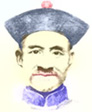
The Second-Generation core inheritor of Wu-style Taijiquan
Li Yiyu (李亦畬, Pinyin: Lǐ Yìyú; original name Li Jinglun 李经纶, Pinyin: Lǐ Jīnglún) was a Qing-dynasty martial artist and scholar from Guangfu Town, Yongnian County, Hebei Province. Born in Daoguang 12 (1832) and deceased in Guangxu 18 (1892), he attained the imperial examination juren degree (举人, Pinyin: Jǔrén) and became a pivotal figure bridging the foundational and transmissional phases of Wu-style Taijiquan.
In the history of Wu-style Taijiquan, Li Yiyu was not only the principal inheritor of Wu Yuxiang’s ideas, but also the first to organize, analyze, and record the school’s theoretical framework in concrete form.
Li Yiyu was born into a scholarly family. His father was named Li Shixin (style name Yizhai), and his mother was of the Wu family. He was the eldest of four brothers. From an early age, he received training in both civil learning and martial practice.
Such an environment enabled him to integrate physical training with principled reflection naturally, and this later became a defining feature of his Taijiquan thought.
Li Yiyu was the nephew of Wu Yuxiang (武禹襄, Pinyin: Wǔ Yǔxiāng), the founder of the Wu-style Taijiquan framework. In his later years, Wu Yuxiang did not accept students broadly; instead, he transmitted his accumulated knowledge—both theoretical and practical—to Li Yiyu alone in a systematic manner. This relationship of study continued for more than twenty years. As a result, Li Yiyu did not merely learn postures or techniques, but also fully grasped Wu Yuxiang’s overall structure of thought, understanding of force, bodily organization, and training approach.
This stable continuity is precisely what allowed Wu-style Taijiquan to preserve its path with clarity.
Li Yiyu pursued an exceptionally rigorous approach to both study and training. Whenever a new insight arose regarding principles or bodily structure, he would write it down, keep it close at hand, and contemplate it repeatedly. If he found anything inconsistent with practical application or principle, he would revise it and verify it again without delay.
Through this process, martial theory—originally abstract—gradually became a verifiable training system, and Wu-style Taijiquan achieved a high degree of alignment between theory and practice.
According to surviving materials, the key writings that Li Yiyu organized and explicated include the Five-Character Formula 《五字诀, Pinyin: Wǔ Zì Jué》, the Secrets of Releasing and Dissolving 《撒放秘诀, Pinyin: Sā Fàng Mì Jué》, the Introduction to Taijiquan 《太极拳小序, Pinyin: Tài Jí Quán Xiǎo Xù》, the Essentials of Frame-Walking and Push-Hands Practice 《走架打手行要, Pinyin: Zǒu Jià Dǎ Shǒu Xíng Yào》, and the Treatise on Emptiness and Fullness, Opening and Closing 《虚实开合论, Pinyin: Xū Shí Kāi Hé Lùn》.
His thought places the “overall structure” at the center, using internal coordination to govern external movement, stillness to guide motion, and insisting that theory must be proven through push-hands and real application rather than mere memorization or imitation of outward forms. For this reason, texts such as the Five-Character Formula《五字诀》 and the Introduction to Taijiquan《太极拳小序》 are not merely explanatory writings, but tools for continual verification and refinement of training.
In his later years, Li Yiyu collated and copied into three volumes the Taijiquan Treatise 《太极拳论》 by Wang Zongyue (王宗岳, Pinyin: Wáng Zōngyuè), together with Wu Yuxiang’s writings and his own accumulated notes. One volume he kept for himself; one he gave to his younger brother Li Qixuan (李启轩, Pinyin: Lǐ Qǐxuān); and one he transmitted to his disciple Hao Weizhen (郝为真, Pinyin: Hǎo Wéizhēn). These later came to be collectively known as the “Three Original Manuscripts.”
The “Three Original Manuscripts” became the most important documentary foundation of Wu-style Taijiquan.
In the autumn of Guangxu 18 (1892), Li Yiyu was overcome with grief after the death of his mother, fell ill, and passed away on the eighth day of the eleventh month, at the age of sixty-one.
According to the Wu (Hao) lineage record, Li Yiyu transmitted his art with great caution. He had four disciples: Hao Weizhen, Ge Fulai, Li Baolian, and Li Baorang. Li Baolian and Li Baorang were his sons.
Among these disciples, only Hao Weizhen received the transmission in both theory and practice in full. The later development of Wu (Hao)–style Taijiquan therefore proceeded primarily through the line of Hao Weizhen.
Scope of Transmission and Lineage Structure
According to the Wu (Hao) lineage record, Li Yiyu transmitted his art with great caution. He had four disciples: Hao Weizhen, Ge Fulai, Li Baolian, and Li Baorang. Li Baolian and Li Baorang were his sons.
Among these disciples, only Hao Weizhen received the transmission in both theory and practice in full. The later development of Wu (Hao)–style Taijiquan therefore proceeded primarily through the line of Hao Weizhen.
Historical Context and Lineage Clarification
Records of martial transmission in the Qing dynasty differ from modern encyclopedic or academic writing. Apparent discrepancies often arise not from conflicting facts, but from differing explanatory standards—especially regarding naming systems, levels of transmission, and terminology connected to the imperial examinations.
In lineage description, traditional Chinese martial arts frequently distinguish between “general learning” and “complete transmission.” This article follows the Wu (Hao) lineage perspective and clearly states that Li Yiyu was the sole recipient who fully inherited Wu Yuxiang’s system. At the same time, it retains the abbreviated phrasing commonly found in external materials so that readers may compare and understand the differences in framing.