


- Details
- Written by Tong
- Hits: 9034

郝月如師公
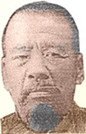
Hao Yueru (郝月如, Pinyin: Hǎo Yuèrú) was a successor within the Wu (Hao)–style Taijiquan lineage, originating from Guangfu Town (广府, Pinyin: Guǎngfǔ), Yongnian County (永年, Pinyin: Yǒngnián), Hebei Province (河北, Pinyin: Héběi). He was born in 1877 and passed away in 1935. His father was Hao Weizhen (郝为真, Pinyin: Hǎo Wéizhēn), a prominent third-generation successor of Wu (Hao)–style Taijiquan.
Hao Yueru began training in Taijiquan under his father from an early age, with daily life closely integrated with martial practice. He later associated closely with Li Yiyu (李亦畬, Pinyin: Lǐ Yìyú), observing his practice and listening to his explanations of Taijiquan principles, through which he gained deep understanding of theory, body method, and application. Through systematic and rigorous instruction from his father, combined with sustained personal practice, he gradually established a complete and stable grasp of the Wu (Hao)–style Taijiquan system.
During his adult years, he was engaged in commercial activities. After his father’s passing, he was invited by the Yongnian County Guoshu Institute (国术馆) to formally teach Wu (Hao)–style Taijiquan. In 1928, he was appointed head of the Yongnian County Martial Arts Institute, assuming responsibility for instruction and transmission. In 1930, he was invited to Nanjing (南京, Pinyin: Nánjīng) to teach at institutions including the Supreme Court, the Budget Department (later the Ministry of Finance), and Zhongyan University (中燕大学, Pinyin: Zhōngyàn Dàxué), enabling the art to spread within governmental and academic settings.
In his later years, he resided primarily in Nanjing (南京), devoting himself to teaching and the organization of Taijiquan knowledge. In August 1935, he passed away due to illness in Nanjing at the age of fifty-nine.
He possessed both solid practical experience and deep theoretical cultivation in martial studies, emphasizing mutual verification between principle, body method, and application. As a fourth-generation successor of Wu (Hao)–style Taijiquan, he inherited the system of his predecessors and further advanced its maturation in teaching articulation, theoretical organization, and dissemination, thereby laying a stable foundation for subsequent transmission.
Essentials of Wu (Hao)–style Taijiquan 《武式太极拳要点, Pinyin: Wǔshì Tàijíquán Yàodiǎn》 is a work compiled to systematize the core principles of the tradition, addressing structural body methods, principles of force usage, and key points of practice. His other works include Structural Organization of Taijiquan Forms and Push Hands 《太极拳行架与推手》, Fifteen Methods of Push Hands Training 《十五种推手方法》, and Hao Yueru’s Martial Scholarship Experience 《郝月如拳学经验》.